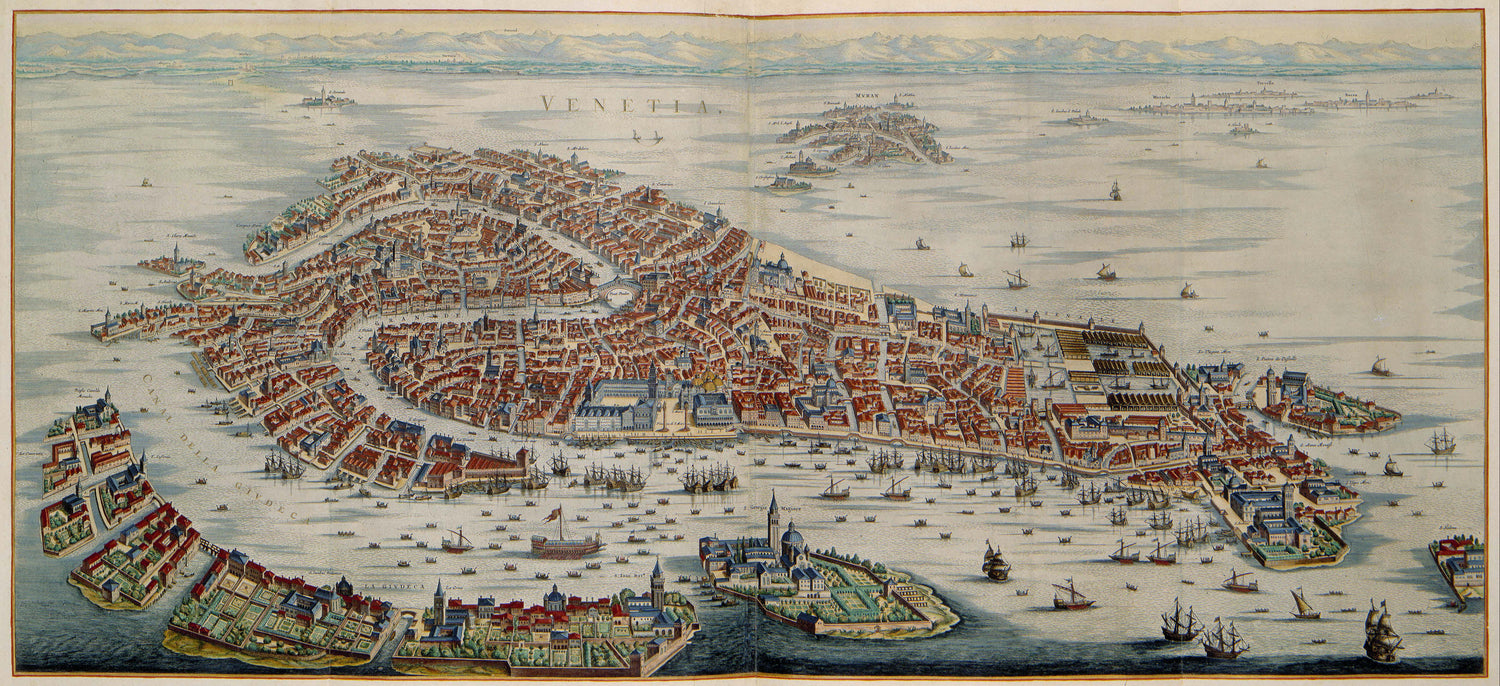
Venice in 1291: a city of wood and fire
At the end of the 13th century, Venice was already a shimmering power on the water. Ships arrived from every corner of the Mediterranean, warehouses were packed with spices, fabrics, and precious goods, and the city grew upward and inward, with wooden houses pressed tightly together along narrow calli and canals.
In the middle of all this beauty and prosperity, there was a constant, terrifying presence: fire.
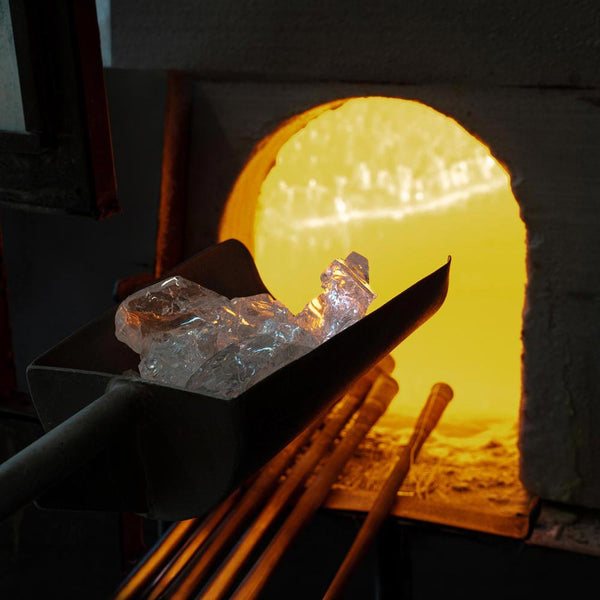
Glassmaking furnaces, which had to burn day and night at extremely high temperatures, were scattered throughout the city. In a Venice largely built of wood, a single spark could be enough to turn an entire neighborhood into ashes. For a trading empire that depended on its warehouses, its palaces, and its churches, the risk was simply too high.
A drastic decision: the decree of 1291
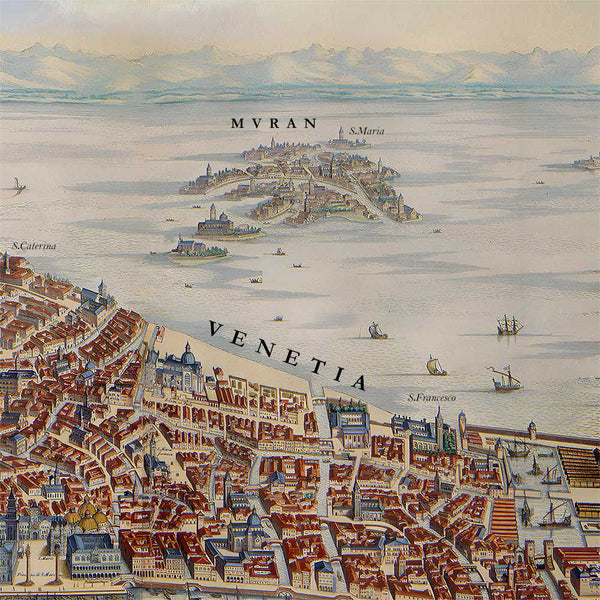
In 1291, the government of the Most Serene Republic of Venice decided to act. The Maggior Consiglio issued a decree that would change the history of glass forever: all glass furnaces had to be moved out of Venice and relocated to the nearby island of Murano.
Officially, it was a safety measure. Moving the furnaces away from the dense, wooden heart of the city meant reducing the danger of devastating fires, keeping flames and smoke at a distance, and protecting warehouses and monuments that were vital to Venetian power.
But safety was only part of the story.
Glassmaking had already become a strategic activity for Venice. By concentrating the furnaces on Murano, the Republic could control production much more effectively: who worked, what was being made, and with whom that glass was being traded. The master glassmakers were not just artisans anymore – they were a resource to be managed, and in some ways, guarded.
Secrets of fire: glass as a state asset
Over time, the techniques developed in the lagoon became increasingly refined. The recipe for transparent, crystal-like glass, the deep, vibrant colors, the delicate enamels, the iconic murrine: all of this was far too precious to risk losing.
For Venice, glass was no longer just a beautiful material. It was intellectual property, centuries before that term even existed.
The Republic turned many of these techniques into true state secrets. Master glassmakers were offered status and certain privileges, but their freedom to leave the lagoon was often limited. In some periods, abandoning Venice with those secrets in mind could be considered an act close to treason. The message was clear: the knowledge of Murano had to remain in Murano.
Why Murano became the island of glass
Choosing Murano was not a coincidence. The island lay close enough to Venice to remain under tight control, yet far enough away to reduce the impact of any incident. There was more space to build furnaces, workshops, storage areas, and houses for the growing community of glassmakers and their families.
Surrounded by water, Murano offered a kind of natural protection. Fires could be contained more easily than in the crowded center of Venice, and the island itself could be watched and regulated with relative simplicity. Little by little, what had been just another island in the lagoon began to change its identity.
Murano became a place with a very specific vocation: glass.
Entire families dedicated themselves to this craft, passing it down from father to son. Surnames began to be associated with particular styles, techniques, or colors. The island turned into a living workshop, where fire and sand were transformed into objects that would travel across Europe and beyond.
A new life for the master glassmakers
For the glassmakers, the decree of 1291 meant starting over in a new place. Furnaces, tools, raw materials, apprentices, and families all had to be moved to Murano. It was a logistical challenge, but also a turning point.
On Murano, glassmakers found both limits and opportunities.
They were under the watchful eye of the Republic, yet they also enjoyed recognition and social status. Their work brought prestige to Venice, and the most skilled among them could obtain special titles and privileges. Murano gradually became a kind of “elite district” of glass, where innovation, rivalry, and tradition lived side by side.
The result was a continuous push to experiment and refine: thinner glass, purer transparency, more daring shapes, and more complex decorative techniques. What began as a safety measure to protect Venice slowly turned into the engine of an extraordinary artistic evolution.
1291: the symbolic birth of Murano glass
Glassmaking in the lagoon existed well before 1291, but that year marks a symbolic beginning: the moment when Murano officially became the heart of Venetian glass.
From that decision would grow:
- crystal-clear glass admired in royal courts across Europe;
- vibrant colors that caught the light like gemstones;
- chandeliers that illuminated palaces and theaters;
- and everyday objects transformed into small works of art.
All of this has its roots in that crucial choice: moving the dangerous fires out of Venice and concentrating them on an island that would, over the centuries, turn them into beauty.
Why this story still matters today
When we talk today about “Murano glass”, we are not just describing a product. We are invoking a story that begins back in 1291, with a decree that changed the map of Venice and the destiny of an island.
It is the story of how fear of fire became creative energy, of how political decisions shaped an artistic tradition, and of how Murano, from a simple island in the lagoon, became the world capital of artistic glass.